
The Journey
My father-in-law was passionate about estate planning, regularly sharing his findings. When both of my in-laws received a diagnosis of dementia, it became clear that he had not envisioned, discussed, or planned for the scenario of becoming ill or losing mental capacity. If he, who had read so much on estate planning, had not thought about or planned for such a situation, how many people would, and to what extent?
The family helped out before things could get out of control, quickly appreciating the efforts required to manage personal care and financial affairs. How could this life transition have been planned for and managed better? Are people contemplating what happens when they cannot manage independently anymore?
Aging, dementia, critical illnesses, estate planning and advance care planning have become regular topics of conversation in our personal social network. Given our personal experiences, my wife and I proactively listen and share our experiences. Over time, we have been called upon to help friends and family. The list of issues and challenges we’ve encountered keeps growing, but there is a common theme: “I wish I had known.”

“I wish I had known”
The time came to revisit and expand our own estate and advance care plans. Recognizing that we could be incapacitated allowed us to produce a more complete plan and better readiness for our family. But more interestingly, our preparations enabled us to partner with my own parents to take action on their situation.
After many years of applying and fine-tuning our framework to my parents’ plans, through a period of their diminishing skills and capabilities, has brought tremendous confirmation of the value of certain key actions, along with some critical learnings.
The insight and experience gained during this ongoing journey have resulted in the creation of the PACT (Plan-Activate-Communicate-Transition) planning framework, allowing all to live with peace of mind, knowing affairs are well organized, communicated and ready for transition to trusted advocates.
The recommendations and guiding principles presented in this book have become fundamental additions to my own estate plan and to my regular open communication about my plan with my family, typically yearly.
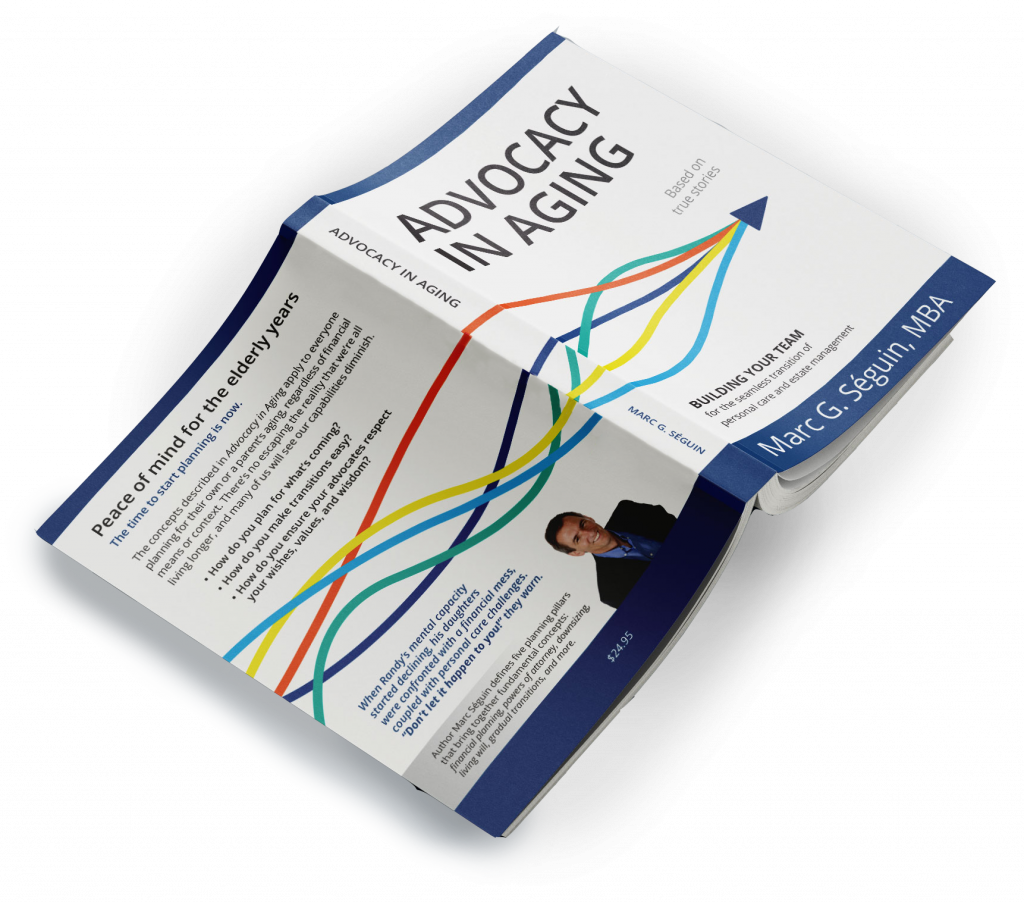
After receiving continuous interest in my findings and the PACT framework, it became clear that there was a need to communicate the importance of the five pillars as a fundamental enhancement to the financial, estate, and advance care planning processes, for anyone planning for aging years, life events, or critical illness – hence, the creation of Advocacy in Aging.